Friday, March 31, 2017

Boerenkoolstamppot: Variations on an Old Dutch (Potato) Theme


Michel seldom makes any kind of potato dish. Their high starch content and potential effects on blood sugar levels are reason enough to use other ingredients. Mind you, he likes potatoes. In fact, one of Michel's favorite American potato incarnations is McDonald's hash browns. Are you surprised? He claims they are the closest thing to the "rosti" he loved to eat in Holland. The resemblance is clear. Rösti has its origins in Switzerland and is traditionally prepared in a skillet like a fritter. Its worldwide popularity is easily understandable. The next time you're in an airport food court you might just see Michel waiting in line for his McDonald's order. 


When his favorite hash browns are not available, French fries will do--McDonald's or otherwise. This substitution is also understandable because of the popularity of Vlaamse Frieten or "Friet & Mayo," readily available throughout Amsterdam and Northern Europe, although the names will vary. Yes, street fries with mayo are messy. They are also mandatory, as the perpetually long lines of customers will attest. 


In the U.S. where sugary ketchup is the usual accompaniment, some restaurant servers have a hard time understanding Michel's request for mayonnaise with his fries. This is partly because they are puzzled as to why anyone would want something other than ketchup but also because they don't understand Michel's (accurate) pronunciation of "mah-yuh-nez-eh" when they're used to hearing "may-naze." Sometimes we just ask for aioli and sidestep the issue.  


Stamppot is quintessential Dutch fare, dating from the 1600s according to some accounts; the English translation “mash pot” lets the reader know that the basic element of this dish is mashed potatoes. Not to worry, because there is no actual stamping of feet involved in the preparation of stamppot. A fork or a potato masher will do just fine.


As best I can tell from the stories Michel has related about Dutch food traditions, there seems to be a lot of boiling (i.e., overcooking) of vegetables and very little concern for fancy ingredients. Nothing wrong with that but I’ve never heard or read any reviews about “that great new Dutch restaurant” not to be missed.


Michel’s new recipe is a much lighter and more interesting vegetarian take on boerenkoolstamppot, a kale and potato mash commonly served with rookworst (smoked pork sausage) draped over the top. The Dutch usually prepare stamppotten (pl.) in the fall when the cool weather makes this comfort food even more appealing. Traditional versions include zuurkoolstamppot (sauerkraut mashed with potatoes), andijviestamppot (endive mashed with potatoes), and the aforementioned boerenkoolstamppot (kale mashed with potatoes).

Traditional Boerenkoolstamppot with Rookworst
Photo: www.la-casserole.nl

A quick note about bothering you with all those very long Dutch terms:
Yes, I am an obsessive word nerd and I am acutely aware that you, patient and potentially hungry reader, may not share my fascination with the visual aspect of Dutch words. Many years ago I told Michel that all those doubled letters—especially vowels—make some words look to my eyes like an unwieldy hand of playing cards. Now he just responds with a patient smile when I pose my usual question about a new Dutch term: “How does that spell itself?”


Michel’s version of stamppot includes the kale and potatoes, of course, but he incorporates mushrooms to provide a meaty texture as well as a delicious sauce made with butter, shallots, lemon, and juniper berries. This recipe will work with fingerling potatoes, new potatoes, or pretty much any kind of potato. Michel used a package of “gem potatoes” from the supermarket this time around—a mix of red, yellow, and purple.


For the sauce you will need:

2 shallots, chopped
1 stick of butter
Juice of one lemon
1 tablespoon dried juniper berries (coarsely chopped or ground)
Salt and pepper

juniper berries
photo: www.naturallivingideas.com

Melt butter in a small saucepan over low heat.
Add shallots, lemon juice, and juniper berries, and a pinch of salt and pepper.
Set aside while you tend to the stamppot prep.
 
Sauce with shallots, lemon juice, juniper berries, butter


To make Michel's vegetarian stamppot you will need:

6-8 stems of fresh kale, leaves removed, rinsed, and cut into small pieces

2 cups of Crimini mushrooms, sliced (any kind of mushrooms will work, combination is best)


24 oz. of gemstone, fingerling, or new potatoes


Olive oil
Salt and pepper
(add some garlic if you like)


Boil potatoes with a teaspoon of salt.


While potatoes are cooking, heat olive oil in a large skillet and add sliced mushrooms.

(Mushrooms should cook with “quite a bit” of olive oil, salt, and pepper.)


When mushrooms begin to caramelize, add chopped kale.


Allow the kale to “cook down a bit” then add boiled potatoes.
Mix gently to keep potatoes whole. (There’s an important reason for having whole potatoes on your plate.)

Spoon kale-potato-mushroom mixture onto plates.


Once on the plate, mash the potatoes with a fork to open them. 
(That’s the fun stamppot part.)

Drizzle shallot butter sauce over mashed potatoes.
Eat. Repeat. Because you will want a second helping.


Thursday, February 23, 2017

Give Beets a Chance: Salt-Roasted Beets with Fresh Horseradish


You might have more in common with U.S. Presidents than you realize, at least when it comes to food. Ronald Reagan was known for fancying gourmet jelly beans while his Veep George H.W. Bush made news when he declared war on broccoli. With Jimmy Carter it was an understandable Georgia fondness for cornbread (which Michel definitely does not share); Lyndon Johnson had a thing for Fresca, and the weirdest-presidential-food-obsession award goes to Nixon who liked to eat cottage cheese with ketchup. That's just gross. 
photo courtesy http://www.foodandwine.com
Those of you who are experiencing Obama withdrawals and other symptoms of 2016 presidential election PTSD might be surprised to learn there was a beet controversy in 2009 when Michelle Obama announced the return of the White House vegetable garden. Beets were excluded. She told an interviewer: "Neither the president nor I have the beet gene." This comment elicited numerous responses from pro- and anti-beet constituents who offered recipes, videos, etc., in support of her position or to persuade her to change her mind. There seems to be no "work together across the aisle" when it comes to the taste of beets, even in the Obamas' kitchen. 

photo courtesy www.bbcgoodfood.com


Michel's response to my question about his childhood beet experiences was immediate and vehement: "I hated them! You could chase me out of the house with them!" His mother Gemma (whose cooking skills have been described in previous posts) made a dish with boiled beets and potatoes to which she added sugar. Redundant, yes, because beets are used for making sugar. Their sweet, earthy quality is one reason they so often end up pickled. (This is where you nod sympathetically and murmur, "Bless her heart.")


Huzarensalade photo courtesy www.eatdutch.com

Google led me to a Dutch dish called "Huzarensalade" or "Huzarensla" that could be what Gemma intended to make. Some sources attribute the name to the Huzaren (Hussars), a cavalry of Hungarian riders who infiltrated hostile territory for the Imperial Austrian armies. The Huzaren had to blend with the enemy so they couldn't build fires for cooking. Instead, they carried prepared foods like cooked beef or tongue, eggs, pickles, beets, and potatoes which they mixed together to make a cold (pink) salad. I'm not sure if the Hussars no-cook strategy worked in their favor or if the outcome was more like the memorable My Cousin Vinny line delivered by Marisa Tomei: "Yeah, you blend." These uniforms don't appear to provide much camouflage.  

photo courtesy www.budapestdailyphoto.com

As you can probably ascertain from their intense color alone, beets are chock-full of antioxidants, fiber, and minerals; one "average" beet will provide 11% of your daily Vitamin C, 22% of your daily magnesium, 37% of your daily folate--whatever that does for you. If you buy fresh beets with greens still attached (and not wilting on the stem), you can prepare them like kale, chard, or any other greens you like. They're also brimming with nutrients. 

Michel's recipe will work with any kind of whole beet--red, yellow, chioggia (a/k/a candy cane), or albino; however, despite the visual appeal of the heirloom varieties, only the old-school red beets have betacyanins, a cancer-fighting compound. 

photo courtesy https://halifaxseed.ca


Ready to roast?

Heat oven to 400 degrees.

You will need:

Whole beets (one big beet = two servings for us)

Coarse salt--kosher, sea salt, etc.

Fresh horseradish (or prepared will do)

Aluminum foil

Baking sheet or roasting pan with a rack


Peel the beets before roasting.


(Michel learned the hard way that this step is far less perilous than trying to 
peel a really hot beet. Also, the gloves keep your hands from turning purple.)


Place one beet on a piece of foil large enough to wrap/close. 
Cover with salt, turning and patting the beet as needed to make sure salt adheres.


Fold foil pouch around beet, making sure edges are sealed. 


Roast on baking pan rack for 90 minutes (or two hours if you forget you have beets in the oven). Tip: You may want to place some foil under the rack to make clean-up easier.

Remove roasted beets from oven and open foil carefully.
Place beets on a safe surface for slicing. 


If you're using fresh horseradish, you will need to peel a piece of it before grating. 

Place beet slices on serving plate. 


Top with grated fresh horseradish. 


Enjoy the sweet-salty taste of the beets paired with the spicy, olfactory-opening jolt of fresh horseradish. 


That's it. 


Easy!


Monday, January 2, 2017

Easy DIY Hummus with Roasted Garlic, Pistachios, and Pomegranate Arils


“Many people are saying” that 2016 was a rough year. All the news about political shenanigans, catastrophic weather events, and unconscionable suffering around the world (not to mention the hoopla about dead celebrities) has pretty much limited our already narrow household television viewing options to a handful of cooking programs and Antiques Roadshow. It’s tough to admit but on a few occasions we have opted for Guy Fieri reruns over cable news in our quest for a taste of cognitive sorbet. You could interpret that as a sign of the apocalypse but it’s too soon to tell.

The New Yorker Cover, Nov. 14, 2016

It turns out that 2016 wasn’t a great year for prepared foods, either. The USDA and FDA reported a combined 560 recalls as of early December, mostly due to concerns about listeria. That’s some bad PR for so-called Big Food companies and stockholders. Among the items recalled was a familiar favorite: Hummus. The ubiquitous Sabra brand was affected as well as Trader Joe’s.


If you’re curious about the other 559 foods recalled in 2016, this article may answer some of your questions. It’s no surprise to see chicken nuggets and hot dogs on the list but it is unsettling to learn that some frozen fruits and vegetables may not be safe for consumption.

What Not to Eat: 9 of the Biggest Food Recalls of 2016


Michel is downright vigilant about the foods he purchases and prepares. We are “those people” who annoy you when they stop in the supermarket aisle to study nutrition labels while fellow shoppers wait but eventually reach around to get what they want with a loud “pardon me."  Fair warning: If the label content proves inadequate, we’ll continue to stand there while I google more information on my phone. 

We seldom buy prepackaged foods like hummus or pesto. It’s safer and often cheaper to make your own, also easier to control the salt content and to avoid the potentially harmful effects of commonly used additives like citric acid, potassium sorbate, and soybean oil. These preservatives are intended to prevent growth of listeria and other malicious organisms as well as to prolong shelf life, i.e., to fatten the Big Food bottom line. You can do your own googling about that stuff if you like. It’s not pretty.


Here is Michel’s recipe for DIY Hummus. It contains no chemical additives but that’s not a problem because you’ll finish eating it before the bacteria figure out where you live.

If you've tried making hummus before, you might have been disheartened* by the results. It could be that your hummus-ish puree was less like the packaged supermarket hummus you enjoy and more like the spackling compound you bought at Home Depot to fill the nail holes in your walls. Maybe your chickpea glop tasted a little like spackling compound, too. Take heart. You can do this.


You will need:
1 can of chickpeas, drained and rinsed
8 whole garlic cloves
1 lemon (or equivalent juice of one lemon)
1 teaspoon sumac
1 tablespoon cumin seeds
¼ cup tahini (sesame paste) 
2-3 tablespoons of vegetable broth
½ teaspoon salt
olive oil 
pistachios, pomegranate seeds for topping (or choose your own)


Heat oven to 400 degrees.

Fold garlic cloves into a foil “pouch” and cover with olive oil. 
Close pouch and roast for half an hour.


Toast cumin seeds in a dry skillet for 1-2 minutes “until it becomes fragrant,” then grind them.


Mix ground cumin and sumac in a medium container or bowl.  

Add tahini “with the oil and all” to dry spice mixture. Stir to blend.

Add chickpeas, garlic, lemon juice, olive oil, vegetable broth, and salt.


Transfer to your favorite blending machine and blend until smooth.  

Add a bit more olive oil if needed to achieve the consistency you want.

Top with pistachios and pomegranate seeds. Eat with abandon. Or crackers. 


*Schadenfreude Bonus:
If it makes you feel any better or if you just want to make fun of me sometime, my first attempt (in a previous life) at making old school Southern fried chicken with mashed potatoes and gravy was a fiasco. I didn't own a normal mixer so put my already overcooked potatoes in a blender which yielded a soupy mess. My "gravy" was equally disastrous because I put way too much flour in the skillet and the result was a substance that could literally stand on its own. All was not lost, however, because the soupy potatoes and the intransigent gravy actually tasted pretty good once the liquids and solids were combined in the right proportions. 

Now you have a clearer picture as to why Michel does the cooking and I just write about it. With that, I wish you a happy new year filled with delicious and healthful foods!


Friday, December 9, 2016

Best Kept Secret in San Francisco? Bio Cafe. Nothing Ungepatchket About It.


Michel frequently goes to San Francisco on business. He has traveled so much over the years that he’s tried just about every kind of food and lodging available on the four continents he’s inhabited, from the posh to the puritanical. Over time he has settled on some favorite places to eat and sleep in the cities he visits most often.


When it comes to food, Michel doesn’t mind occasionally paying for pricey meals if the outcome is worth the cost. It’s a matter of value. He prefers simple, well-prepared dishes to overwrought, “ungepatchket” fare. What’s ungepatchket? It’s a Yiddish word (grammatically, the adjective form) for something “overly ornate, busy, ridiculously over-decorated, and garnished to the point of distaste,” says UrbanDictionary.com. You’ve seen those menu items with meandering descriptions about locally sourced micro greens and other ingredients that often “smother” the main element of a potentially disappointing dish. That’s ungepatchket. Louisville people will understand Michel’s description of these offerings: “That means the chef drags it up one side of Bardstown Road without touching the grassy spots and then drags it down the other side of Bardstown Road while *only* touching the little grassy spots before it comes to the table.” Translation: All of those superfluous preparations add absolutely nothing to the food. 


As for San Francisco, Michel has narrowed down his go-to eating places to only two: Scala’s Bistro near Union Square and Bio French Café on O’Farrell Street.  After hotel check-in, Bio is the mandatory first stop in San Francisco (even on a drizzly day). 


The owner of Bio is a beautiful lady named Sylvie. She has a lovely, engaging smile and makes what Michel has declared to be “the best chocolates in the world.” Just for the sake of clarification, I asked him if Sylvie’s chocolate treats are better than those he raved about eating in Lausanne (as described in a previous post). His answer: Better! Sylvie makes the best chocolates in the world. Did I mention that many are gluten free? Take that, Switzerland!  


Sylvie is originally from Madagascar. For her Bio French Café, she prepares the most delicious vegan and vegetarian items—a surprising twist since Sylvie is neither vegan nor vegetarian herself. The wide variety of salads and sandwiches never disappoint and there’s always an ample array of beverages including house-made kombucha. In fact, Michel had his first taste of kombucha at Bio. Also on the menu: vegan quiche. Michel has attempted to replicate this dish and I’ll post that epic adventure and recipe another time.


On a recent visit, we shared a Protein Ball made with quinoa, flax, and all manner of other good things. It was quite satisfying and not unlike a healthful, adult-y version of a Rice Krispie treat.


Another surprise about Bio Café? The prices. Incredibly reasonable, especially by San Francisco standards. A visitor can have a quiche with side salad or Sylvie's freshly made yogurt topped with beautiful raspberries along with a giant chocolate dessert and a delicious cup of coffee for about ten bucks. Yep. 


Next time you’re in San Francisco, you really should stop by 75 O’Farrell Street, order some vegan chocolates and a coffee, and have a seat at a cozy outside table while you enjoy Sylvie’s incomparable treats al fresco


In the meantime, take a look at Sylvie's menu on the Bio French Organic Cafe website here: http://www.biologiquesf.com/ 


Saturday, July 2, 2016

Cokranut? Crispy Roasted Okra with Coconut (vegan)


Crispy Roasted Okra with Coconut (vegan)

Have you ever eaten a Cronut®? How about a croissan’wich? Maybe a turducken?

I’m an insufferable, incurable word nerd and grammar peeve—which often drives Michel crazy—so I couldn’t help but combine the ingredients in his new okra/coconut recipe to coin the word Cokranut. Makes sense to me and it sounds way more appetizing than a frozen food product called “tofurkey.” The enterprising New York baker Dominique Ansel has actually trademarked his Cronut (doughnut/croissant) invention. We have no plans to visit his Soho establishment but I wouldn’t mind trying the locally available, legally equivalent “doughssant.”

American consumers are accustomed to the blending of words to describe a hybrid fruit like a pluot or a dog breed like the labradoodle. We’ve long understood the employment of the portmanteau to make familiar terms like brunch and smog. Some of these combinations are uncannily descriptive, like “spork.” It’s the perfect name for an unreliable plastic utensil that often breaks at the slightest provocation. “Frenemy” leaves no doubt as to a relationship status. However, I find contrivances like “guesstimate” just plain annoying.

Now that technology has overtaken our communication, even more elisions are part of our daily parlance. Take this “blog,” for example. Clearly, the physical effort required to vocalize that extra syllable in “web log” is too much for us. Thank goodness we have emojis to save us the time and trouble of using actual words to express our thoughts.


Back to the okra topic at hand. I will spare you the part about the origins of the word, but I did find it surprising to learn that: (a) okra is related to the hollyhock plant, and (b) those fuzzy green pods are commonly called ladyfingers in the eastern hemisphere. Whatever you call it, the pods we eat are technically the fruit of the okra plant.

Abelmoschus esculentus, a/k/a Okra plant


Those of you who survived a southern Protestant upbringing like I did will recall a different kind of ladyfingers—those pale, spongy, non-threatening cookies our mothers bought to assemble magazine recipe desserts for a church social or other clubby event. The unspoken, intangible prize for most remarkable dessert would go to “She who incorporated the most pre-packaged ingredients;” usually the most unnatural color of Jell-O garnered all the oohs and ahhs.  


Ladyfingers cookies (savoiardi) are the foundation of traditional Italian tiramisu, of course, but the sinful liquor part of the recipe was prohibitive for the local cooks in my limited orbit. None of us had a clue that in other parts of the world ladyfingers were a totally different thing.


Most online sources agree that the okra plant is native to northeast Africa and spread from there to the Middle East and the rest of Asia. Bhinda (okra) is a familiar ingredient in Indian dishes such as bhindi masala and bhindi curry. Michel was inspired to invent a new recipe when he found some beautiful fresh okra on a recent trip to Patel Brothers market. As usual, he enjoyed querying the other okra shoppers about how they cook it. Patel patrons' responses are always friendly and sometimes quite animated as they share personal anecdotes about family meals. These pleasant exchanges make grocery shopping a lot more fun.   


This easy roasted okra/coconut recipe is not so far-fetched given the influence of Indonesian/Asian cooking on Dutch cuisine, due in no small part to the 17th century establishment of the Dutch Vereenigde Oost-Indische Compagnie (VOC), or the Dutch United East India Company. Dutch politics and historical trade wars aside (which Michel will gladly discuss with you), this “cokranut” dish will please even the staunchest okra foes. It is also a lighter, more healthful alternative to the stir-fry Indian bhindi masala with its sugary, oily coating.  

Ready?  

Heat oven to 400 degrees with top rack in highest position.
Cover baking pan/cookie sheet with foil.                                                                                                             

You will need:

Fresh okra (any amount will work, depending on how many people you are feeding)


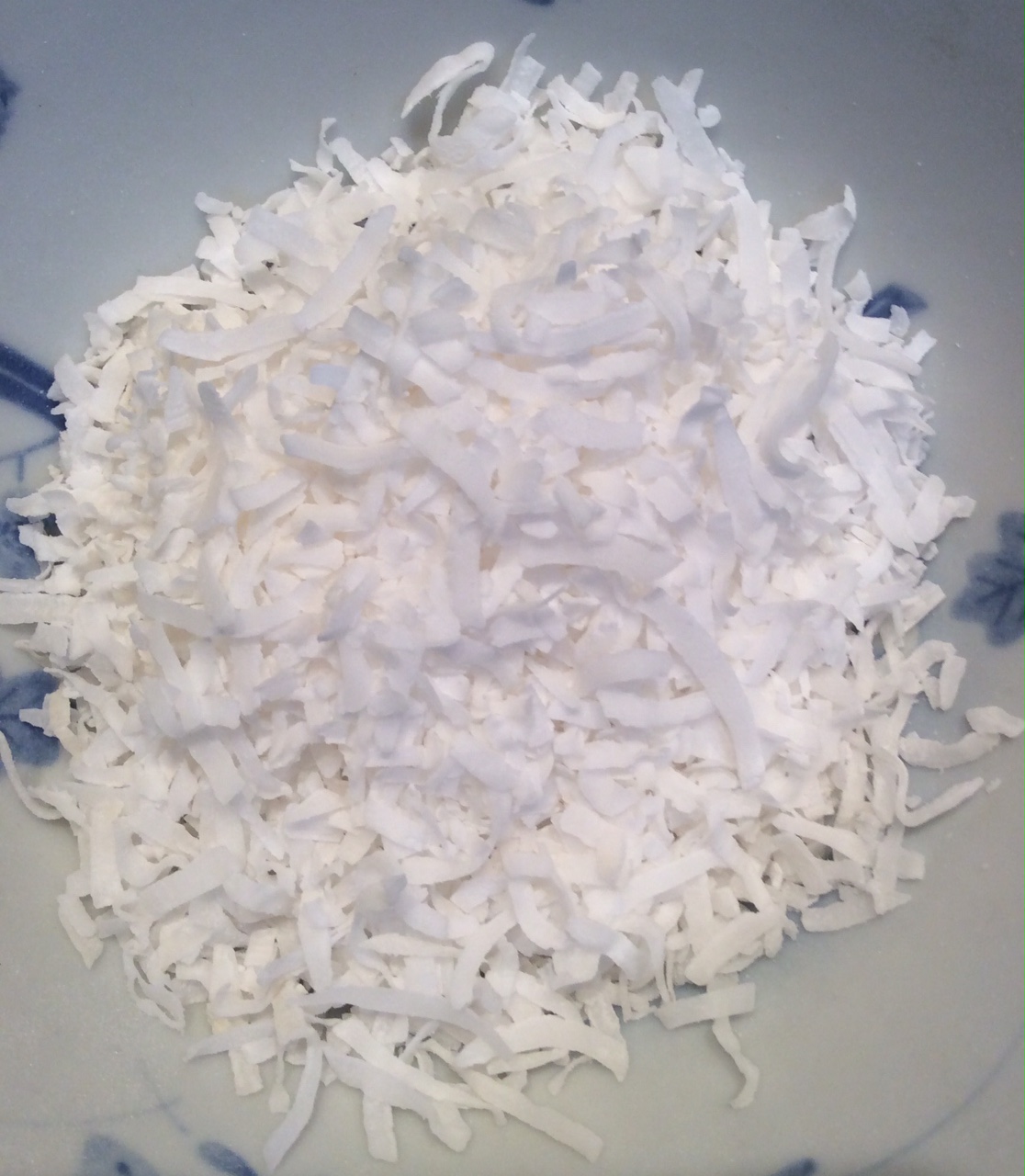
Unsweetened coconut flakes—probably ¼ to ½ cup, enough to sprinkle on top


Olive oil (enough for a thorough drizzling)

Salt and pepper to taste


Wash okra pods, then cut into ½” pieces.

Sprinkle with salt and pepper. Drizzle with olive oil.

Use a spatula to coat the okra slices evenly. “Dredge them through the oil,” per Michel.

Roast for 10-15 minutes then remove pan and turn okra to cook the other side.

Return pan to oven for 10-15 minutes more.

During the last 5 minutes of cooking, sprinkle cooked okra with unsweetened coconut flakes.

Okra is done when coconut flakes are brown. 

Transfer to serving dish and watch your okranut disappear.  Yummy!