Saturday, July 26, 2014

Chickpeas and Christmas Chocolates (in July)


Roasted Chickpeas with Chocolate and Almonds

People always seem to be in a good mood whenever chocolate is involved.  All the recent scientific evidence about antioxidants, flavonoids, and other health benefits of chocolate makes a compelling case for indulgence now and then, but do you know anyone who really needs convincing? What are your fondest or most vivid memories about chocolate?  Maybe it’s baking cookies and eating Nestle Toll House Semi-Sweet Chocolate Chips straight from the yellow cellophane bag when your mother wasn’t looking—not that I ever did that.  You didn’t either, right?  Or opening a can of Hershey’s Chocolate Syrup and drizzling it into a glass of milk in such a way that a lickable amount of syrup stayed on your spoon.  Or making chocolate fudge and cleaning the warm, buttery, fudgy goodness out of the pan with a spatula that also required a good licking.  

I’m sure you have plenty of happy chocolate anecdotes to share.  Or maybe you have a chocolate trauma or grievance you’d like to get off your chest.  Please feel free to leave a comment or two about your relationship with chocolate.  Maybe we can (or should) start a support group for People Who Are Way Too Fond of Chocolate.   

Michel loves chocolate, too.  He exercises his considerable Taurean willpower about almost everything but, when it comes to chocolate consumption, all bets are off.  He’s very careful not to overdo it.  One of the chocolates he recalls from his childhood in Holland was a powdered cocoa in a can, similar to the Nestle Quik stuff we have here in the U.S.  The Dutch brand is Droste (Droste B.V.).  As a boy, Michel was transfixed by the image on the tin: a stern-looking nurse holding a tray which held a can of Droste and a mug, both with the same image of the nurse.  It was like looking into infinity for him.  He couldn’t get enough. 


Another chocolate Michel was fond of as a boy was the traditional Dutch holiday treat, chocoladeletters—chocolate letters in the shape of the child’s first initial.  These were given on the occasion of Sinterklaas, the feast of Saint Nicholas celebrated on December 5th in the Netherlands.  Michel’s initial M meant that he had about twice as much chocolate to enjoy as his older brother Lancelot who was stuck with only a letter L.  Score one for the little brother. 


One of Michel’s more recent chocolate delights occurred during a business trip to Lausanne a few years ago.  While waiting to meet a client, he was strolling the streets of the beautiful Swiss city when he came upon Blondel Chocolatier on the Rue de Bourg, clearly a venerable institution.  In the window he saw enormous trays of large pieces of various chocolates and he couldn't resist.  He went into the shop and chose several pieces which he took back to his hotel and consumed with great pleasure. 

Image from Chocolats Blondel photo gallery

Are you salivating yet?  All this talk of chocolates and holidays is dandy, but it doesn't diminish my annoyance with the current spate of television ads for “Christmas in July” sales that have nothing discernible to do with Christmas.  I understand that there are countries in the Southern Hemisphere where the holiday is celebrated in July because that’s when the winter weather happens.  It’s more festive, I guess.  But here in North America I think it’s a tiresome marketing ploy to shore up retail sales between Fourth of July barbecue bargains and the inevitable Back-to-School blitz.  I’ll deal with Christmas when the time comes.  In December.  Probably at the last minute, as usual.  

Image from Australia, via Wikipedia


On to the food.  Michel decided to spice up some chickpeas with chocolate and peppers—a combination that works very well.  Hope you enjoy this new vegan recipe!  

Roasted Chickpeas with Chocolate and Almonds

·        1½ cups chickpeas, soaked overnight and rinsed
·        1 teaspoon salt
·        ½ teaspoon Szechuan peppercorns
·        1 teaspoon red pepper flakes
·        3 pieces star anise
·        1 tablespoon cumin
·        3 cloves
·        3 cardamom seeds
·        ¼ cup cocoa powder
·        ½ cup grated almonds
·        1 cup almond milk

You will need a soup pot or saucepan and a baking dish.

·        Place chickpeas in water in a large pot with 2-3 inches covering.
·        Bring to a boil, reduce heat to low, then cook for 1 ½ to 2 hours until chickpeas are really soft.
·        Drain all the liquid away.
·        Transfer chickpeas to 9 x 13 baking dish.
·        Remove the cloves, star anise, and cardamom pieces.
·        Sprinkle chickpeas with cocoa powder and grated almonds.
·        Mix to coat then bake for 10-15 minutes at 350 degrees.
·        Set oven to broiler temperature.
·        Pour almond milk over chickpeas.
·        Place baking dish under broiler for about 10 minutes until almond milk has almost evaporated and a slight crust forms.

·        Serve over quinoa mixed with chopped basil and baby kale (liberally sprinkled with vinegar and olive oil). 

Or, skip the almond milk part and eat the roasted chocolate-almond chickpeas as a crunchy, healthful snack. 

Wednesday, July 16, 2014

Not Your Grandmother’s Green Beans: Dal with Long Beans, Green Garlic, and Fenugreek (vegan)

If you’re a regular reader of The Expat Epicure (thank you!), then you’re familiar with Michel’s adventures in exotic food stores.  He recently went to Patel Brothers on a quest for fenugreek leaves which are widely used for many culinary and medicinal purposes, especially ayurvedic applications.   My utterly non-scientific Google search for fenugreek led me to wildly divergent homeopathic treatments for everything from thinning hair to weight loss to lactation problems.  As for culinary uses, fenugreek seeds and leaves are quite commonly found in Indian cooking—curries, dal, etc.—even salads.   Some cooks use the leaves like those pretentious “microgreens” I fail to understand.  
 
Fenugreek Leaves--photo from BBC Good Food website
Michel conducted his on-site interviews at Patel’s just the way he always does, asking other customers how they use various greens and odd-looking vegetables.  His interview subjects are always friendly, sometimes offering entire recipes on the spot.  After all his questions had been asked (at least for the moment) and answers weighed, the fenugreek leaves were acquired along with some long beans which were sort of an impulse buy, not unlike those memorable fresh garbanzo beans that turned out to be such a pain to peel.   
 
long beans
Michel has always asked lots of questions.  About everything.  In food stores, the most common question is “What is that?!”  Like I would know.  He admits this trait must have driven his parents and teachers crazy when he was a child.  Some people still find it unsettling, while others find it amusing and even fun.   For me, it depends on the topic at hand. I have resigned myself to the fact that I can never answer all of Michel’s questions, even though I’d like to be able to.   To that end, I have devised a short series of hand signals that indicate to what degree I don’t know the answer to a given question.  This little set of gestures saves time and minimizes frustration. It’s like a sign language consisting of only three phrases and it has served us (me) well so far. 

Back to the beans.  Michel bought the long beans because “you don’t always see them.”  They are used a lot in Chinese cooking and they’re quite different from traditional “green beans” or string beans in texture and taste.  Those childhood neighbors of mine who would show up at the door with “a mess of greens” from their summer garden would also bring enormous amounts of green beans.  It was my job to snap the beans into bite-sized pieces and peel away those annoying strings from the edges.   Most of the cooks I was around as a child would either cook the beans to death with a hunk of ham bone for seasoning, or can them in very large Mason jars for winter meals.  Bless their hearts.  They meant well.   Long beans are less belligerent than Western string beans, I think.  They require less cooking time and have a slightly sweet taste.   

Here is Michel’s new recipe.  Hope you like it! 


Dal with Long Beans, Green Garlic, and Fenugreek


You will need: a large skillet, a soup pot, and something for steaming the beans.

Here’s a list of ingredients (à la Trader Joe’s soft-sell junk mail shopping list):

Fresh ingredients
Other ingredients and spices 
1 bunch long beans
1 ½ cups lentils
6 slices fresh ginger
1 tablespoon dried fenugreek leaves
½ an onion
1 tablespoon turmeric powder
4 Thai chili peppers
1 tablespoon mustard seeds
5 cloves garlic
1 tablespoon cumin
3-4 stems green garlic
1 teaspoon pickled mango ginger               (or pickled mango leaves)

1 teaspoon salt

2 tablespoons olive oil

dried fenugreek leaves

First, the long beans:
·        Cut into 2-3 inch pieces.
·        Steam for about five minutes.
·        Set aside for later. 
steamed long beans
In the soup pot, heat 1 tablespoon olive oil then add:
·        5 cloves garlic, finely chopped
·        3 slices ginger, chopped
·        4 green cayenne peppers, chopped
Thai chili peppers

Sweat the ginger, garlic, and peppers.

Add:
·        1 tablespoon turmeric powder

Stir, then add:
·        1½ cups lentils
·        4-5 cups water
·        1 teaspoon pickled mango ginger and 1 teaspoon salt

pickled mango ginger

Bring to a boil. Reduce heat and simmer uncovered for 30-45 minutes until lentils are done. Stir occasionally, using your kavvam if you have one.  (I wrote about the kavvam adventure in a previous post.)


In the large skillet, heat one tablespoon olive oil then add:
·        3 slices ginger, chopped
·        ½ an onion, chopped
·        3-4 pieces of green garlic, chopped
green garlic

Sweat the garlic, onion, and ginger. Move everything away from the center of the pan, then add:
·        1 tablespoon mustard seeds
·        1 tablespoon cumin


Let seeds and cumin “start to explode a little and that’s what you want.”
After the seeds and cumin have exploded and the herbs and onion have had a good sweat, add steamed long beans. Gently mix to coat beans with spices.


Add bean mixture to lentils and top with crushed dried fenugreek leaves. 

And there you have it: Dal with Long Beans and Fenugreek. 

Serve over quinoa, cauliflower “couscous,” or any grain of choice. Delicious with freshly pickled cucumber slices on the side.

Bon appetit! 


Tuesday, July 8, 2014

Oh, Snap! Fire Roasted Vegetables or, "Man of La Plancha"

Summer is grilling season for lots of people.  These are the times that tempt some vegetarians (who shall remain nameless) to fall off the wagon.  Stores are filled with colorful paraphernalia ranging from aprons to patio umbrellas to tiki torches.  Neighbors cook hot dogs and steaks outdoors and our four little dogs come inside smelling from charcoal and irritated by the voices of cornhole competitors.  Meanwhile, Food Network television programming is overrun with shows about meat, fire, and various cooking methods for the best carnivorous results.  Michel’s vegetarian cooking is inventive and satisfying, aside from its obvious health and environmental benefits but—once in a while he gets a notion that he’d like to have something meaty.  This is what happened recently when we watched one of those “meat and fire” food shows.  The guys on the program were outdoors cooking a whole animal “a la plancha,” translated, grilled on a metal plate.  

It was this Argentine cowboy-style cooking method that gave Michel the idea to make grilled vegetables with smoked sausage.  We rationalized our decision to eat meat and weighed the consequences in a Mark Bittman “flexitarian” way, noting that we hardly ever break our diet.  So the shopping list was made and everything was fine until we read a New York Times article titled “Virus Plagues the Pork Industry, and Environmentalists.”  Nope.  The end.  No sausage for us. 

Michel, still determined to cook something over a fire, decided to make vegetables a la plancha.  On the menu: sugar snap peas, leeks, asparagus, and carrots.  Our little grill is nothing special. It’s a floor sample we bought at Home Depot a few years ago after our eBay hibachi fell apart. We don’t have a fancy Williams-Sonoma plancha, just an old baking sheet thing that my grandmother used to cook with.  As for my unforgiveable pun, if someone ever makes a “Man of La Plancha” musical, I think Al Franken would have to play Michel’s part—not that the world needs another forgettable musical, or another terrible wordplay.  Imagine two hours of singing and dancing about a man and his grill. No thanks. But Michel and Al Franken do look alike.  Check it out next time you're Googling around. 


Fire Roasted Vegetables with Garlic, Basil, and Rosemary

You will need: (for two servings)

·        1 cup sugar snap peas
·        1 leek, cut into ¼ “ slices
·        12 asparagus spears
·        6 carrots
·        2-3 tablespoons olive oil
·        4 cloves garlic, chopped
·        1 tablespoon fresh basil, chopped
·        1 tablespoon fresh rosemary, chopped
·        1 teaspoon salt

·        Black pepper to taste


Place baking sheet on hot grill. 
Pour a little olive oil on the pan and let it get hot—but not too hot.
Place vegetables on hot pan all at once.

Add garlic, basil, rosemary, salt and pepper.

Drizzle olive oil over everything. (Yes, Michel orders California olive oil by the gallon.)

Turn vegetables “once in a while” using tongs to make sure everything gets cooked.

Veggies should be done in about ten minutes.

Serve over Michel's quinoa salad (quinoa with chopped baby kale, basil, olive oil, and apple cider vinegar--the organic one with the mother).

The dish can also be made in a skillet indoors if it's raining or you're not in a grilling mood. 


Sunday, June 22, 2014

Who doesn’t like fresh figs? Well, maybe Cleopatra…*

One of my teacher colleagues has a fig tree that produces copious amounts of fruit each year.  Of course, this attracts lots of birds and animals that often get to the figs before the humans do.   So my friend goes out early in the morning before school to harvest figs each day they are in season, filling whatever containers she has at hand—baskets, bowls, colanders, paper bags—you name it.  We, her lucky colleagues, get to feast on the fresh figs she brings to school to give away.  Nice lady, right?  


My students are always curious about the foods I have with me at school and the figs proved to be no exception.  I was surprised (and saddened) to realize how many of my high school students had never laid eyes on a fresh fig.  Their comments about the alien, purple-skinned “things” on my desk ranged from an enthusiastic “What’s that?!” to an eye-rolling “Eewww.”  Of course, these responses shouldn’t be surprising considering far too many young people eat processed, packaged, and frozen “food” instead of fresh items.  I happily offered to share my stash of figs with the kids who were intrepid enough to try one.  Once they had tasted a real fig, my students were forced to reconsider their opinions about Nabisco Fig Newtons cookies—the only other fig food known to most of them.  

Need more evidence regarding fresh versus packaged?  One medium fresh fig contains 37 calories, 8 grams of natural sugar, and zero fat according to the Nutrition Data website we like to use: http://nutritiondata.self.com/facts/fruits-and-fruit-juices/1884/2
One serving of Fig Newtons (two cookies) will set you back 110 calories, 12 grams of sugar, plus 2 grams of fat.  But wait—there’s more.  Yes, Fig Newtons are a better snack choice than, say, a fudge brownie because the “fig paste” filling itself isn’t so bad—but—the outer cookie part is where the empty carbs and sugars are lurking, just waiting to attach themselves to your thighs.  Read more here:  http://www.livestrong.com/article/415553-are-fig-newtons-healthy/

If you’ve never explored the Nutrition Data website, you might find it interesting.  The information on the site comes from USDA's National Nutrient Database for Standard Reference and is supplemented by listings provided by restaurants and food manufacturers. It sounds boring but it's quite the opposite.  Colorful and well organized information is easy to find and easy to understand.  You can search data for fresh foods as well as brand name items—anything from raw figs to Krispy Kreme doughnuts.  Caveat: If you love Krispy Kremes, don't read it.  The data will break your heart. 

Sadly, our own young fig tree didn’t survive the freakish winter we had this year.  Michel and I were so excited late last fall to find dozens of baby figs starting to form on its branches but the fruits didn’t have time to ripen before the pre-polar vortex besieged us.  And now in mid-June this once promising little tree shows no signs of life.

Before, after.  Thanks, Winter 2014. 

*Speaking of no signs of life, I’m breaking a fundamental rule of teaching: Never assume anything. However, I am assuming you are familiar with the story of Cleopatra and the figs.  Some accounts of her demise maintain that she met her end as result of a bite from an asp that was hidden in a vessel of figs.  Others say the asp was in a basket of flowers.  Some say there was no asp at all and that she somehow poisoned herself.  It's not important, really, because it’s a great story no matter how she died.  But--I can never look at a container of fresh figs without thinking of Elizabeth Taylor. 


Now for the recipe:
Cannellini Beans with Rosemary, Almonds, and Fresh Figs. 

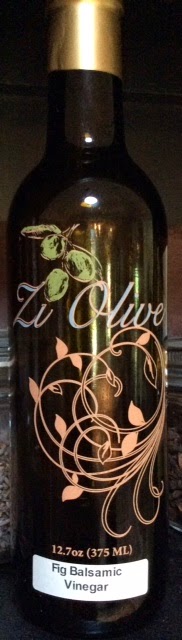
Curious?  It’s a brand new ingredient combo for Michel and he’s very pleased with the results.  One ingredient he used for this dish is Fig Balsamic Vinegar from the Zi Olive shop at Westport Village.  It’s not necessary to use this particular vinegar, but it’s really, really delicious.   (Thanks, Georgette!)   
Here is the Zi Olive link for more information: http://www.ziolive.com/


Ready to cook?  Preheat oven to 350 degrees.

fresh rosemary


You will need:
·        1 ¼ cups dried cannellini beans, soaked overnight
·        5-6 fresh figs, cut into quarters lengthwise (maybe more depending on size)
·        1 cup fresh almonds, finely chopped
·        ¼ cup fresh rosemary, chopped
·        1 heaping teaspoon red pepper flakes
·        1 teaspoon salt
·        1 tablespoon fig balsamic vinegar
·        1 teaspoon regular apple cider vinegar (organic with “the mother” if you have it)

In a 3-quart saucepan:
·        Combine beans, rosemary, salt and pepper with enough water to cover.  Bring to a boil.
·        Reduce heat but not too much. There should still be “movement in the water.”
·        Boil for about an hour, adding water as needed to keep mixture covered.
·        During the last 30-45 minutes add chopped almonds. Continue cooking until beans are  done, taking care that the water does not boil over because the almonds make it “act  like milk.”  
before baking: bean-almond-fig mixture drizzled with fig balsamic vinegar 


When beans are done, transfer mixture to a 9 x 13 baking dish, or whatever baking vessel you like.  Add quartered figs. Drizzle with fig balsamic vinegar and apple  cider vinegar.  
·        Mix together and bake for 20-30 minutes.

after baking
Serve with salad and/or grain of choice or this fig-related side:

Roasted Brussels Sprouts with Fresh Figs and Baby Kale

Michel used the remainder of the fresh figs to make Roasted Brussels Sprouts with Fresh Figs and Baby Kale.  His original Brussels sprouts recipe is among the January 2014 posts but, for this dish, he used figs and drizzled with fig balsamic vinegar.  He also added some cut-up baby kale to the mix before roasting. Yum!


Monday, June 16, 2014

Gluten Sensitive? Kamut Point.

Michel is quite the storyteller.  He has a lifetime of stories about people and places and things that are sometimes funny, sometimes poignant, and always memorable.  For example, there’s the one about the time he played his way out of a traffic ticket on Lakeshore Drive in Chicago when the police officer saw a violin case on the back seat of the car.  Michel just stood there next to the road, playing Bach and waiting for the cop to wave him on with a warning.  There’s also the one about the TSA agent in the Detroit airport who scanned the cello case Michel was taking on a business trip.  Upon looking at the x-ray screen as the case inched its way down the security conveyor, the agent said “Oh, so you got a piano in there.”  Now you feel safe flying, right?  Not so much. 

I love a good story as much as the next person, but I find the saga of the origin of kamut rather implausible, despite the fact that I found it on a Purdue University horticulture website. (And for all you Purdue people, Boiler Up!)  The article reads in part: “Following WWII, a US airman claimed to have taken a handful of this grain from a stone box in a tomb near Dashare, Egypt. Thirty-six kernels of the grain were given to a friend who mailed them to his father, a Montana wheat farmer. The farmer planted and harvested a small crop and displayed the grain as a novelty at the local fair. Believing the legend that the giant grain kernels were taken from an Egyptian tomb, the grain was dubbed ‘King Tut's Wheat.’ But soon the novelty wore off and this ancient grain was all but forgotten.”

Oh yes, there’s more to this tale if you’d like to continue reading.  It’s a little too “Indiana Jones” for my taste but it’s still an interesting account.  Time to suspend my disbelief about how precisely thirty-six kernels of grain made their way from an Egyptian tomb to a Montana farm.   Full account here: Kamut: Ancient Grain, New Cereal
Meanwhile, the bearded wellness guru Dr. Andrew Weil claims on his website that the Egypt story is untrue and that another false legend holds that kamut was “the grain Noah brought with him on the ark.”  Right. 

What’s the big deal about kamut?  It has far more protein than regular wheat, for starters.  It’s also high in minerals and lipids, according to the good people at kamut.com.  All of these things are supposed to give you more energy than other carbohydrates.  If you are gluten-sensitive, you’ve probably done some research about it already.  Some findings show that it’s better tolerated than common wheat by those who have allergies or other sensitivities.  However, warnings appear for those who have celiac disease or absolute gluten intolerance.  Not worth the risk, I would say.  

Kamut is a wonderful option to have in your arsenal of grains for healthful eating.  Its nutty, chewy texture adds a satisfying meatiness to vegetarian dishes.  Definitely plays well with others.  On its own, the grains of kamut look just like the cereal that “Sugar Bear” used to sell us during Saturday morning cartoons--well, at least that's what I see.  Remember that Dean Martin-like cartoon bear in a turtleneck sweater?  He crooned a little jingle about “Can’t get enough of that Sugar Crisp.”  Note:  Sugary cereals are bad.  Cartoon bears are harmless.  And fictional. But I digress…sorry. 

Kamut or Sugar Crisp?  Hmm?

Here’s the delicious, healthful kamut recipe. 

 
Chickpeas with Kamut and Preserved Lemon

You will need:

  • ¾ cup chickpeas
  • ¾ cup kamut
  • 4 cloves garlic, chopped
  • ½ an onion, chopped
  • 3 tablespoons olive oil
  • 1 tablespoon cinnamon
  • 1 tablespoon smoked paprika (pimentón)
  • 1 heaping teaspoon red pepper flakes
  • 1 teaspoon cumin
  • 1 teaspoon coriander
  • ¼ cup preserved lemon, chopped (recipe in a previous post)
  • 1 carton vegetable broth
  • 1 teaspoon salt
 
Preserved Lemon
In a stock pot:

  • Heat olive oil—“not too hot”
  • Add garlic, stir “until it gives off its perfume.”
  • Add onion and let it sweat 3-4 minutes over low heat.
  • Add herbs and preserved lemon.
  • Add chickpeas and kamut.
  • Cover all ingredients with vegetable broth, adding more as needed during cooking.
  • Cover and cook over medium heat until chickpeas are soft, about 1-1½ hours.
  • Peek at the mixture now and then to make sure you have enough broth.
  • Serve with quinoa, polenta, or other grain of choice.  Also nice with kale salad.
Relax and enjoy the lively lemon and cinnamon aromas while you wait for the chickpeas to cook. 

Sunday, June 8, 2014

A Broccoli Dish Even Bush 41 Would Like

Former President George H. W. Bush made a lot of friends when he famously proclaimed: “…I’m President of the United States and I’m not going to eat any more broccoli.”  Remember that one?  Not quite as noble as his “thousand points of light” or as enduring as his “read my lips” promise, but it was a landmark statement for all the broccoli haters, to be sure.  There are plenty of people who hate broccoli but they don’t have the public platform of the Oval Office to declare war on vegetables. 
www.hellawella.com 

It turns out there could be a genetic reason behind a person’s dislike for broccoli and its cruciferous relatives.  Some people have a high degree of sensitivity to bitterness because of a gene identified as TAS2R38.  It has to do with our evolutionary need to avoid bitter, poisonous plants in order to survive.  If you’re looking for a simpler ‘out’ to avoid eating broccoli, just tell people you have a problem with dimethyl sulfide—the stuff that gives off that lovely sulfur smell.  It’s all here in this Huffington Post article if you’re curious:  Why Do Some People Love Broccoli, And Others Hate It?


Broccoli’s image problem is not lost on New York Times reporter Michael Moss.  He wrote an article for the magazine last November describing his adventures with real-life ad agency Victors & Spoils as he challenged them to create a campaign to get people to eat broccoli.  The firm has generated ads for big corporations selling processed foods but, until Mr. Moss posed the question, the idea of selling broccoli or any fresh fruit or vegetable had never been considered.  The article is an interesting read about the marketing process.  My favorite campaign slogan:  “Broccoli: Now 43% Less Pretentious Than Kale”  

Broccoli's Extreme Makeover

New York Times

If you lack the time and/or patience to read the article, you can watch the Times video here:  Video: Creating the Broccoli Craze


On a personal note, I’ve never had a problem getting along with broccoli.  In fact, I was the weirdo in my circle of childhood friends because I liked it.  (Admittedly, I was a weirdo for lots of reasons but my preference for broccoli over mashed potatoes was right there at the top of the list. I can see you nodding ‘yes’ right now.)  In my defense, I did not like the newfangled Birdseye frozen broccoli with the lumpy orange “cheese” sauce. Ugh.  Michel never had the typical American supermarket/frozen food experience while he was growing up in Holland.  Someone in his household would go to the cheese shop or the bakery or the green grocer or the butcher every day to buy fresh items. No crazy bulk purchases, no ‘big box’ shopping for potato chips and a lawnmower à la Costco.  He still makes frequent trips to various food stores during the course of a week, buying only what’s needed for a day or two.  This method makes sense because it cuts down on waste of both food and money.   It also makes food selection and preparation a more immediate, conscious experience rather than a ‘what-can-I-find-in-the-freezer’ ordeal.

Whatever your approach, I’m sure you will find Michel’s broccoli recipe delicious and easy to prepare.  Here you go:

Broccoli with Fresh Basil and Garlic

You will need:
  • 2 “good sized” broccoli crowns
  • 4 cloves garlic—but don’t do anything with it yet
  • 3-4 tablespoons olive oil
  • a small bunch of fresh basil
  • grated parmesan cheese
  • salt and pepper
  • garlic press
basil chiffonade
In a large skillet:
  • Cut the thick stems off the broccoli, allowing the flowerets to separate.
  • Slice the stems into ¼ inch pieces to expedite cooking.
  • Heat the olive oil--“but not terribly hot.”
  • Add sliced broccoli stems, cook covered over low heat for 5-6 minutes, turning with tongs every couple of minutes.
  • Add broccoli flowerets.
  • Press garlic cloves directly over flowerets.
  • Add salt to taste and a few grinds of pepper.
  • Stir broccoli-garlic mixture and cover.
  • Cook over medium-to-low heat for about 10 minutes, stirring every couple of minutes.
  • While broccoli cooks, ‘chiffonade’ the fresh basil, i.e. roll up the leaves and cut into narrow little ribbons.
  • Place broccoli in serving dish and top with basil chiffonade and grated parmesan cheese. 
  • EAT.